
Viewing 49 - 54 out of 99
Patient Education

Skin Conditions
Acanthosis Nigricans
Acanthosis nigricans presents as a darkening and velvety thickening of the skin, most commonly affecting the neck, armpits, and groin region. It is most commonly associated with obesity and insulin resistance; people who have acanthosis nigricans are more likely to develop diabetes. In very rare instances,

Skin Conditions
Atopic Dermatitis
Atopic dermatitis is the most common form of eczema. It is a chronic, recurring rash characterized by dry, inflamed skin, and intense itching. Children are most commonly affected, but the condition can occur at any age. In infants, the rash most typically involves the cheeks. In young children, the creases

Skin Conditions
Contact Dermatitis
Contact dermatitis is a form of eczema that develops after the skin comes in contact with a substance that acts as an irritant or allergen. The affected areas become red, inflamed, and itchy. Swelling, blistering, crusting, and oozing can also occur. Irritant contact dermatitis is the more common type,
Skin Conditions
Eczema (Dermatitis)
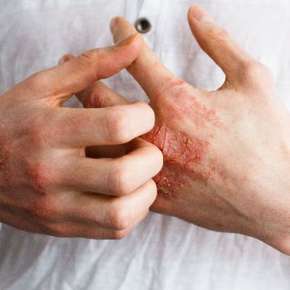
Eczema refers to a group of conditions characterized by dry, inflamed, and itchy skin. The most common kind of eczema is atopic dermatitis. Other forms of eczema include contact dermatitis, irritant dermatitis, nummular dermatitis, and dyshidrotic eczema. The term eczema is often used by people to refer

Skin Conditions
Folliculitis
Folliculitis is the medical term for inflammation of a hair follicle. It typically presents as pink bumps or pustules (pus filled bumps) centered around a hair follicle. The condition can appear anywhere on the body where there are hairs, including on the face, chest, back, buttocks, and/or legs. The

Skin Conditions
Granuloma Annulare
Granuloma annulare is a harmless type of skin rash that often presents with ring-shaped lesions. Although the condition can appear anywhere on the skin, favored sites are the hands, feet, elbows, and ankles. It is typically found in children, teenagers, and young adults. Granuloma annulare is more prevalent


Monday
8:00 am - 5:00 pm
Tuesday
8:00 am - 5:00 pm
Wednesday
8:00 am - 5:00 pm
Thursday
8:00 am - 5:00 pm
Friday
Closed
Weekend
Closed
OFFICE HOURS
Lunch 12:00 pm - 1:00 pm
Monday
8:00 am - 5:00 pm
Tuesday
8:00 am - 5:00 pm
8:00 am - 5:00 pm
Wednesday
Thuirsday
8:00 am - 5:00 pm
Closed
Friday
Weekend
Closed