
Viewing 7 - 12 out of 38
Patient Education

Skin Conditions
Dermatitis Herpetiformis
Dermatitis herpetiformis is an autoimmune skin disease that causes recurrent, intensely itchy blisters to form on the elbows, knees, back, buttocks, and/or scalp. It is linked to the ingestion of gluten found in wheat. It can also occur with celiac disease and has been associated with thyroid disease.

Skin Conditions
Lichen Sclerosus
Lichen sclerosus is a chronic skin condition that most commonly affects the genital skin. The affected areas become thin, white, crinkled, irritated, and/or intensely itchy. Blisters and sores can also form. Left untreated, the condition can lead to scarring and can increase an individual’s risk for
Skin Conditions
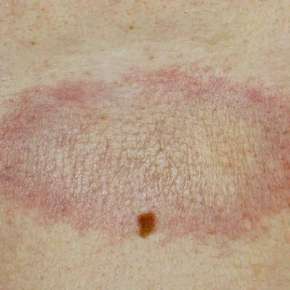
Morphea (Localized Scleroderma)
Morphea, also known as localized scleroderma, is a rare condition that causes scar-like changes to the skin. Morphea commonly presents as oval lesions on the trunk (chest, abdomen, and/or back). It can also present as a linear stripe on the arms, legs, and even the forehead or scalp. In its initial inflammatory

Skin Conditions
Acne
Acne is a common skin condition caused by the blockage of hair follicles by sebum (oil), dead skin cells, and bacteria. The blocked pores lead to whiteheads, blackheads, inflammatory papules or nodules (red, tender bumps), pustules (pus-filled bumps), and even cysts. Acne breakouts can occur at any age

Skin Conditions
Acanthosis Nigricans
Acanthosis nigricans presents as a darkening and velvety thickening of the skin, most commonly affecting the neck, armpits, and groin region. It is most commonly associated with obesity and insulin resistance; people who have acanthosis nigricans are more likely to develop diabetes. In very rare instances,

Skin Conditions
Atopic Dermatitis
Atopic dermatitis is the most common form of eczema. It is a chronic, recurring rash characterized by dry, inflamed skin, and intense itching. Children are most commonly affected, but the condition can occur at any age. In infants, the rash most typically involves the cheeks. In young children, the creases


Monday
8:00 am - 5:00 pm
Tuesday
8:00 am - 5:00 pm
Wednesday
8:00 am - 5:00 pm
Thursday
8:00 am - 5:00 pm
Friday
Closed
Weekend
Closed
OFFICE HOURS
Lunch 12:00 pm - 1:00 pm
Monday
8:00 am - 5:00 pm
Tuesday
8:00 am - 5:00 pm
8:00 am - 5:00 pm
Wednesday
Thuirsday
8:00 am - 5:00 pm
Closed
Friday
Weekend
Closed